How it Works
Deep Planner is a forecasting and planning engine that instantly shows when your product goals can realistically ship, based on your real team capacity and technical constraints. Think about it as a navigation panel on a ship that allows for captain to oversee the full route before the crew commits.
Example
Goal: given list of features and constraints, create a delivery forecast
Product Manager defines
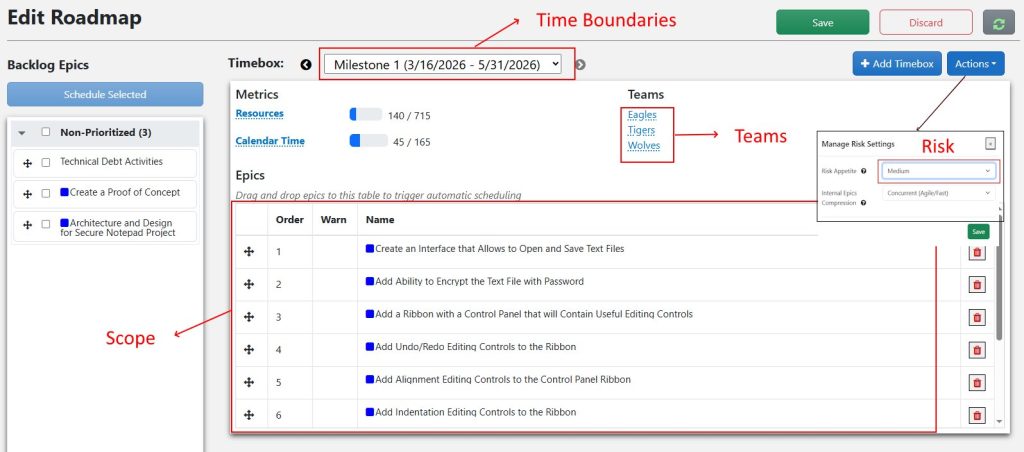
- What you want to build (Initiatives & Epics)
Engineers define:
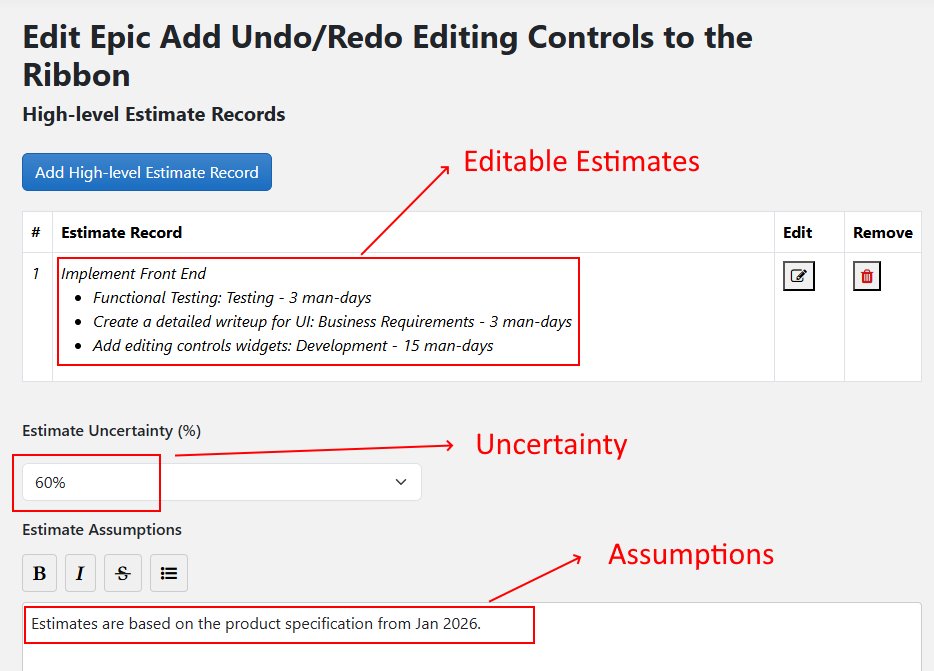
- Technical requirements (Work Items, High-level Estimates)
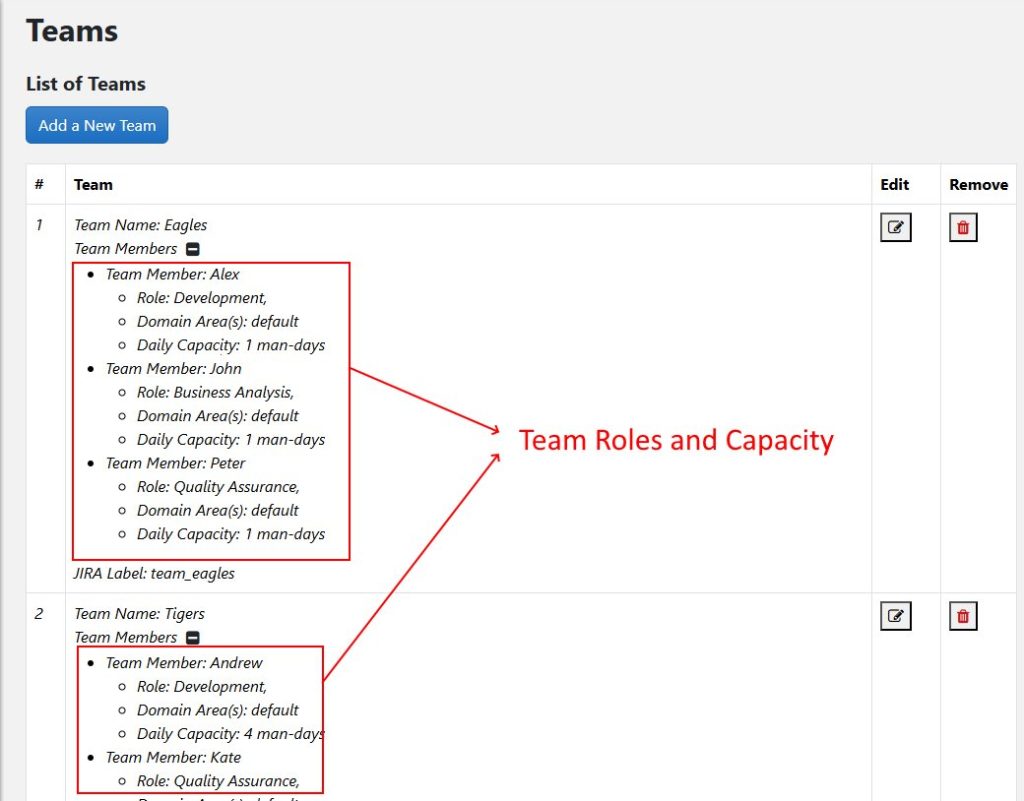
- Who will build it (Teams, Roles & Capacity)
Deep Planner calculates the forecast in seconds:
- When each epic can ship
- What will delay delivery
- How trade-offs affect timelines
The Process
Step #1 Feed the inputs: epics and teams
Step #2: define roadmap scope
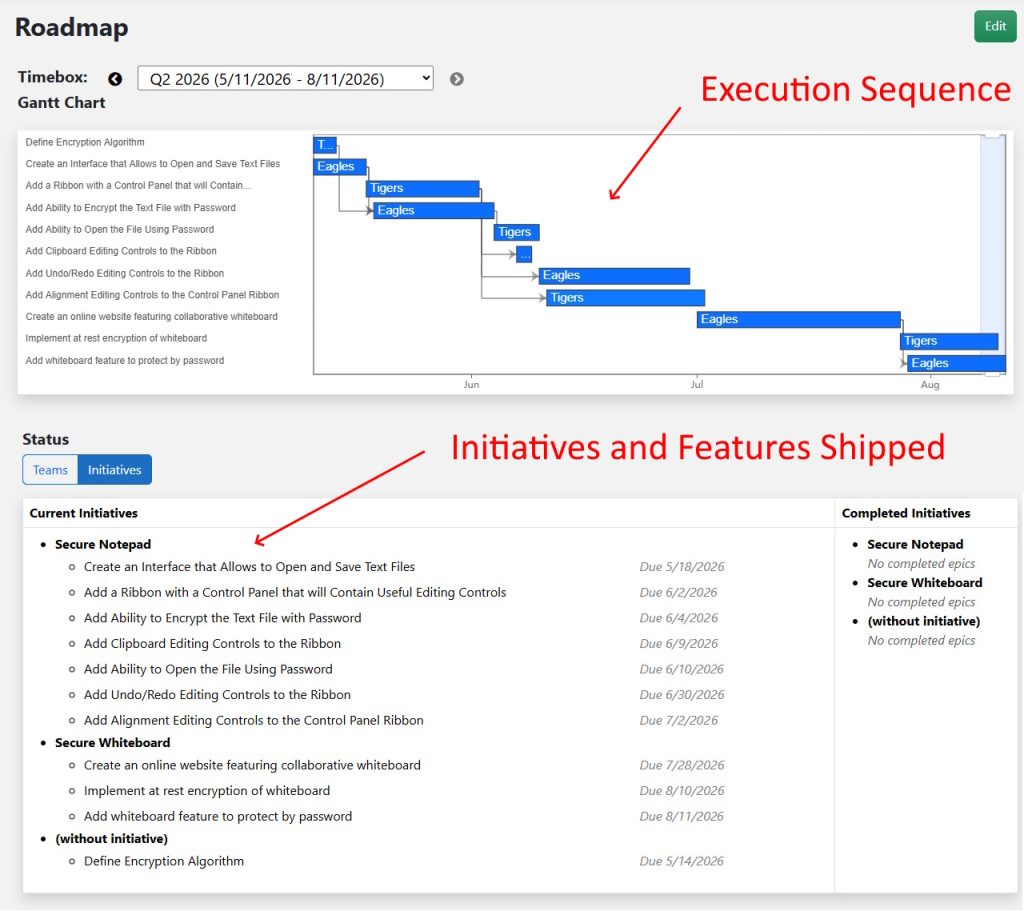
End Result: roadmap model with balanced and risk-adjusted execution sequence
- Resources are leveled by distributing the daily load between the teams
- Tasks are sequenced by priorities and dependency constraints
- Risk buffer is included to tasks duration
- => Ideal for an early-stage decision making
The technology behind forecasting
Deep Planner is not a static Gantt chart. It is a constraint-based planning engine that performs roadmap simulations based on Theory of Constraints principles. Case studies show the high efficiency of the method: better productivity and performance of teams, and up to 95% of successful delivery rate, when all data pieces are valid.
The advantages are achieved through the following optimizations:
- Using verified structured data for realistic evaluations.
- Dependencies visualization to address bottlenecks early.
- Decreasing multi-tasking to relieve the cognitive load for teams.
- Adding buffers to decrease execution risk. To learn more about how risk is managed see a separate article.
Ready to start? Try it!
Learn the process in-depth
For detailed steps check out the article Creating a Roadmap Forecast: Step by Step Guide
0 Comments